Mongolia's New Cabinet Is Assembled. Now Comes the Hard Part.
Overview
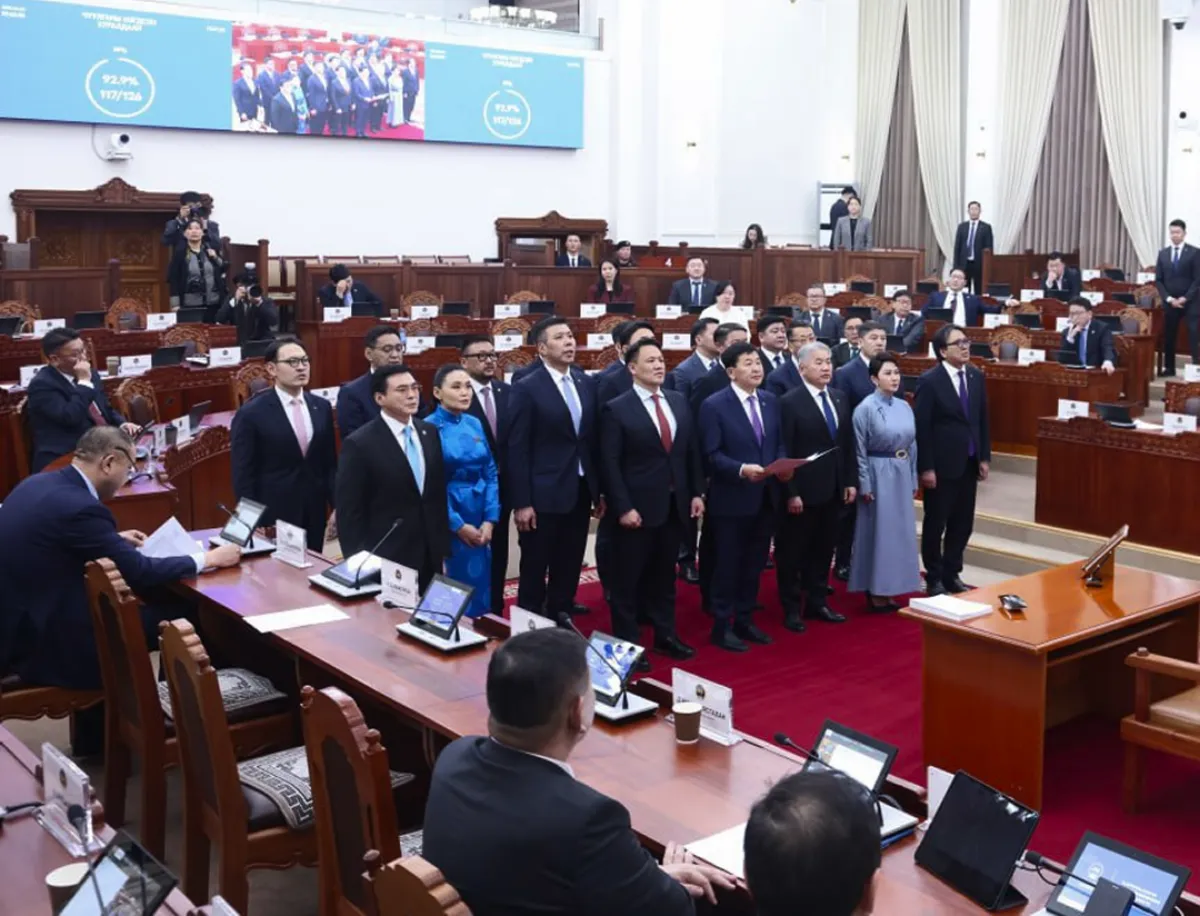
PM Uchral N. assembled a 19-minister cabinet at 2:24 AM on April 4 — Mongolia's third premiership in nine months. Ten ministers carry over from Zandanshatar's administration, signaling a deliberate continuity-over-replacement strategy during what Uchral characterized as a 'triple crisis' of fuel prices, commodity swings, and political fragmentation. Appointments in Mining (Damdinnyam G.), Finance (Mendsaikhan Z.), and Energy (Naidalaa B.) preview where policy will move first — with Oyu Tolgoi renegotiation, a ₮3.3T fiscal deficit, and grid reliability all on the first-100-days docket.
Analysis
This analysis examines the key factors driving developments in Mongolia's policy & regulationsector, with implications for institutional investors evaluating exposure to Mongolian capital markets. The findings draw on CMM's proprietary data, regulatory filings, and direct engagement with market participants.
“PM Uchral N. assembled a 19-minister cabinet at 2:24 AM on April 4 — Mongolia's third premiership in nine months.”
— Tselmeg E., CMM
Foreign portfolio flows into Mongolia continue to demonstrate selective conviction, with institutional allocators from South Korea, Japan, and increasingly the Middle East deploying capital into liquid equities and structured credit. The regulatory environment has improved meaningfully following recent legislative reforms, though execution risks remain the primary concern for new entrants.
Outlook
Looking ahead, the trajectory for Mongolia's policy & regulation sector remains constructive. Key catalysts include ongoing regulatory reform, increased foreign institutional participation, and improving macroeconomic fundamentals. However, geopolitical positioning between China and Russia continues to present structural complexities that require careful navigation.
Implications
For institutional investors, Mongolia represents a frontier market opportunity with improving accessibility. The combination of natural resource endowment, demographic trajectory, and strategic geographic positioning creates a compelling medium-term investment thesis. Near-term catalysts and risks are well-defined and contractually manageable for appropriately structured allocations.